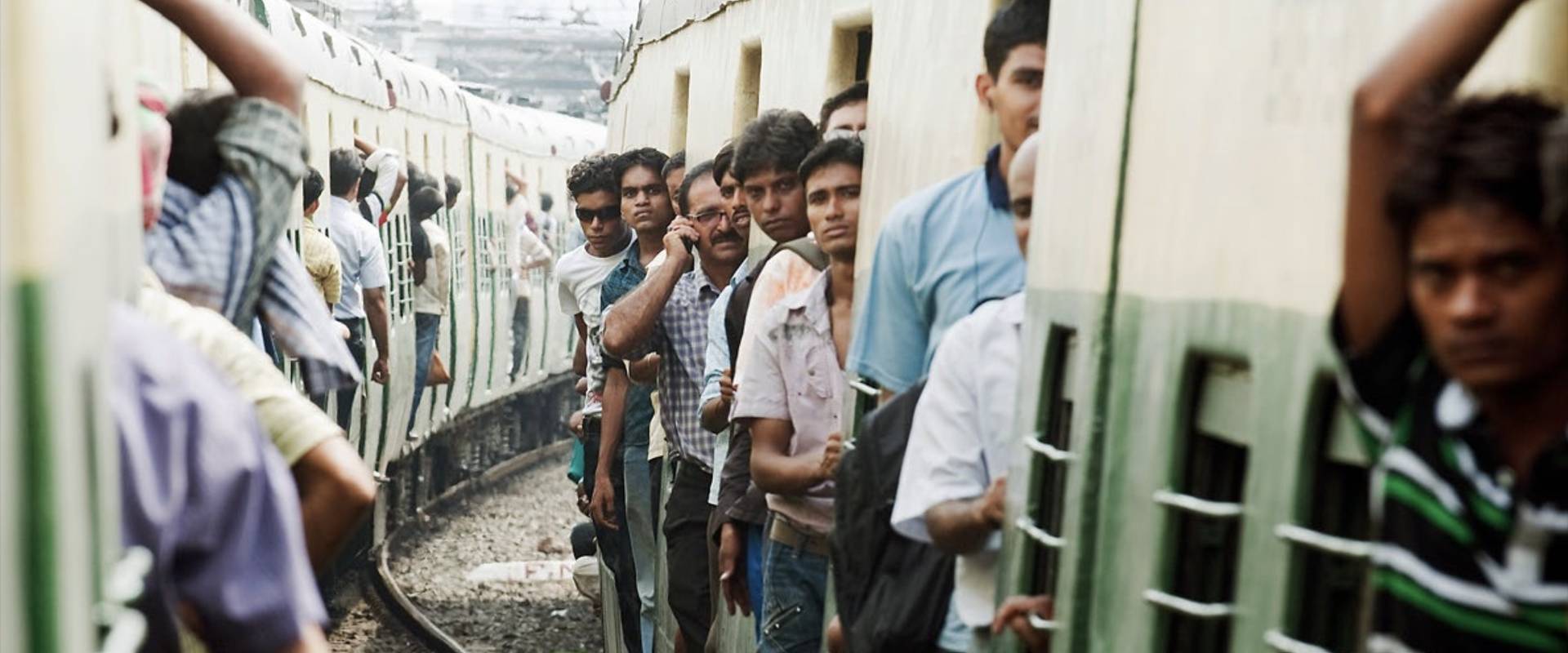
Policy-oriented research on population trends
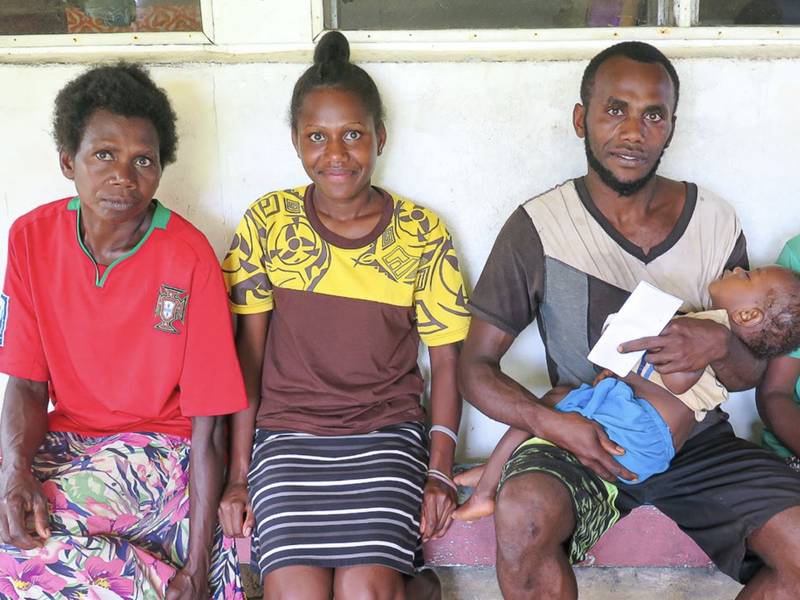
ESCAP publishes reports, working papers, policy briefs and other material analyzing population trends and their policy implications in the Asia-Pacific region. The publications will guide policymakers and all stakeholders.
Latest Publication
Leaving No One Behind: Advancing a Society for All Ages in Asia and the Pacific
This report examines the demographic drivers reshaping the region, analyses the implications for labour markets and the future of work, and highlights the transformative potential of healthy and active ageing. It documents the substantial economic contributions of older persons — through labour, entrepreneurship, unpaid care and social capital — and makes the case for urgently realigning employment systems, social protection and health policies with demographic realities. The report also explores pathways to women’s economic empowerment, recognizing that gender inequality compounds the vulnerabilities of ageing across the life course.
Publications
Using information and communication technologies to address the health-care needs of older persons managing chronic disease : a guidebook and good practices from Asia and the Pacific
Many countries across the Asia-Pacific region are experiencing rapid population ageing and increased rates of chronic disease, leading to greater demand for high-quality, accessible and affordable health-care services for their growing numbers of older persons. The objective of this guidebook is to provide policymakers and other key stakeholders in the region with a resource for the formulation of innovative solutions to address these demographic shifts and related health-care challenges. The focus of the guidebook is on applying information and communication technologies (ICTs) to enable equitable access to high-quality health-care services for older persons facing chronic diseases. It also aims to see how ICTs, can benefit older persons, given demographic, social and economic changes and the future of work in Asia and the Pacific, especially in the health-care sector. Hence the current and expected impact of the Fourth Industrial Revolution play a significant role in shaping how policies are planned and implemented.
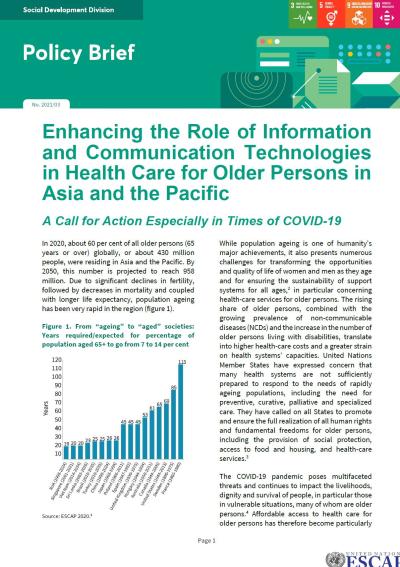
Enhancing the role of information and communication technologies in health care for older persons in Asia and the Pacific
The COVID-19 pandemic poses multifaceted threats and continues to impact the livelihoods, dignity and survival of people, particularly older persons and other vulnerable groups. Affordable access to health care for older persons has therefore become particularly important. COVID-19 has spurred new information and communication technology (ICT) initiatives, enabling continued or enhanced access to quality health care through remote diagnosis, treatment and care, particularly for older persons. This policy brief provides policy options on how ICTs can be used to facilitate access to healthcare for older persons during the COVID-19 pandemic and beyond.
2020 older persons in ASEAN in numbers
The datasheet “2020 Older persons in ASEAN in numbers” provides data on key indicators to reflect the status of population ageing and the situation of older persons in Member States of the Association of Southeast Asian Nations. The indicators range from population indicators such as numbers and percentages of older persons of different age cohorts, disaggregated by men and women, as well as indicators on health, employment, social protection, internet use, education and living arrangements. The datasheet is a tool for reference by policymakers, stakeholders and researchers to design policies to implement the Madrid International Plan of Action on Ageing and the Kuala Lumpur Declaration on Ageing: Empowering Older Persons in ASEAN.
Asia-Pacific migration report 2020 : assessing implementation of the global compact for migration
The Asia-Pacific Migration Report 2020 is a baseline assessment of the implementation of the Global Compact for Migration (GCM) in Asia and the Pacific. It will inform the Asia-Pacific Regional Review of GCM Implementation, to be held from 10 to 12 March 2021. The report presents an overview of migration in Asia and the Pacific. It discusses GCM implementation in the context of the indicative clusters of GCM objectives presented in General Assembly resolution 73/326. It also discusses short- and long-term impacts of the COVID-19 pandemic on migrants and their families, and recommends future collaborative action by governments and relevant stakeholders in order to achieve safe, orderly and regular migration in Asia and the Pacific. Throughout the report there is discussion of the core United Nations purposes and principles on which the GCM is based, including the United Nations Charter, international human rights law, international labour law, and the 2030 Agenda for Sustainable Development. The publication is the product of collaboration among the members of the Regional United Nations Network on Migration for Asia and the Pacific.
Older women and men as providers and recipients of unpaid care work in the Asia-Pacific region
Using the National Time Transfer Accounts (NTTA) methodology, the paper analyses time spent by women and men of different age groups in six countries of the Asia-Pacific region on market work and unpaid care work. The analysis concludes that there are common trends across all countries, which include: (a) older persons are net producers of care, which means they produce more unpaid care work than they consume, (b) older women provide much of the care consumed by older persons, and (c) women of all ages produce the majority of unpaid care work. The paper further provides a policy agenda to recognize and value unpaid care work and provides policy examples from the Asia-Pacific region and other countries in the world. This includes increasing access to paid care; creating incentives to men to provide unpaid care; and social protection to unpaid care workers.
Ageing and its economic implications
Population ageing is a global phenomenon with significant impacts on sustainable development. While being a positive outcome of economic and social development, population ageing will require new economic and social policies if countries are to achieve the 2030 Agenda. Using simulations, the paper shows the impact of different policy options to maintain economic growth in ageing societies in Asia and the Pacific, using China, Indonesia, Japan, Philippines, Republic of Korea, and Thailand, as examples. For each country, the effect of different mitigating policies that seek to stimulate the economy by affecting demography, labour force participation, and productivity are discussed, along with actionable policy recommendations which can be applied to other countries or areas in similar circumstances. The recommendations include increasing labour force participation of older persons, in particular women, to maintain growth and contain the relative size of spending for high-income countries, and to generate growth and provide the fiscal means to finance social protection for upper-middle income countries. Recommendations for lower-middle income economies, particularly for those countries that run the greatest risk of becoming old before they become rich, include investing in productivity enhancement. This involves investing in health and education, ensuring adequate physical capital infrastructure, and a concerted plan to increase the formalisation of the workforce. Recommendations also include measures how to increase labour force participation of women and older persons and on strengthening pension systems.
Events
Fifth Asia-Pacific Review and Appraisal of the Madrid International Plan of Action on Ageing: Briefings of focal points on ageing in North and Central Asia
Blogs and Op-eds

Building a future-ready society so people can live long and age well

Strengthening social health protection for health coverage for all ages