Repository of national policies on ageing
The ESCAP repository of policies on ageing compiles national policies, laws, action plans, programmes and coordinating bodies related to population ageing across Asia and the Pacific, allowing users to explore country-specific policy set ups. It provides links to official policy documents, legislation and national action plans, and is regularly updated with contributions from governments and stakeholders. The page also includes guidance on developing ageing policies, featured policy examples, and resources to support policymakers in advancing the rights and well-being of older persons.
Select a country or click on any country in the map to see the policies, laws, programmes and action plans related to population ageing in each country.
Latest udate: 26 August 2026
| Country/territory | Population at mid-year (thousands), 2025 | Percentage of population aged 65 or over, 2025 | National Coordinating Body | National Policy on Ageing | Action plan | Others |
|---|---|---|---|---|---|---|
| France | 0 | 0% | Minister Delegate for Autonomy, Ministry of Solidarities and Health |
|||
| Macao, China | 722 | 15.1% | Inter-departmental Steering Group on Mechanism for the Protection of Older Persons (established in 2016) |
Legal Regime for Protection of the Rights and Interests of the Elderly, 2018 |
||
| Maldives | 530 | 5% | Ministry of Social and Family Development |
|||
| Georgia | 3,807 | 16% | Ministry of Labour, Health and Social Affairs |
|
National Action Plan for the 2017-2018 State Policy Concept on the issues of Aging in Georgia |
|
| China | 1,416,096 | 14.9% | National Committee on Ageing, established in 1999 |
National Medium and Long-term Plan for Actively Coping with Population Aging (2022-2035), issued 2019 (in Chinese) |
||
| Azerbaijan | 10,398 | 9.2% | Currently, there is no specific policy on ageing |
N/A |
||
| Indonesia | 285,721 | 7.5% | Currently, there is no national coordinating body. |
N/A |
||
| Cambodia | 17,848 | 6.4% | Cambodian National Committee for Elderly (CNCE) which was established based on Sub-Decree No. 158 ANKR.BK on 15 July 2011 |
Second National Action Plan on Ageing (2021–2025) |
||
| Viet Nam | 101,599 | 9.5% | ||||
| Kyrgyzstan | 7,295 | 6% | Government of Kyrgyzstan |
|||
| Nepal | 29,618 | 6.6% |
|
|||
| Sri Lanka | 23,229 | 12.5% |
|
N/A |
||
| Japan | 123,103 | 30% | The Committee on Ageing Society, established in 1995 |
The Japan’s Plan for Dynamic Engagement of All Citizens, 2016 |
||
| New Zealand | 5,252 | 17.6% | The Office for Senior Citizens, Ministry of Social Development |
The Better Later Life – He Oranga Kaumātua 2019 to 2034, 2019 (replaces the Positive Ageing Strategy 2001) |
Better Later Life Action Plan He Oranga Kaumatua 2021 to 2024 (to implement The Better Later Life strategy 2019 to 2034) |
|
| Bangladesh | 175,687 | 6.7% | N/A |
|||
| Tajikistan | 10,787 | 4.1% | Tajikistan does not have a formal, centralized "National Coordinating Body on Ageing". Instead, ageing policies, elderly welfare, and social services are directly overseen by the Ministry of Health and Social Protection of the Republic of Tajikistan |
N/A |
N/A |
|
| Bhutan | 797 | 6.6% | The Ministry of Health (MoH) serves as the national coordination body. There is no specific agency, committee or national multi-stakeholder forum. |
N/A |
||
| Kazakhstan | 20,844 | 9% | Ministry of Labor and Social Protection of the Republic of Kazakhstan |
N/A |
||
| Malaysia | 35,978 | 8% | The National Advisory and Consultative Council for Older Persons (NACCOP), established in 1996 |
|||
| Russian Federation | 143,997 | 17.8% |
|
|
|
|
| Singapore | 5,871 | 14.2% | Ministerial Committee on Ageing, established in 2007 |
|||
| Timor-Leste | 1,419 | 5.2% | ||||
| Lao People’s Democratic Republic | 7,873 | 4.8% | Ministry of Labour and Social Welfare |
In preparation |
||
| Uzbekistan | 37,053 | 6.1% | National Agency for Social Protection under the President of the Republic of Uzbekist |
Currently, there is no national policy on ageing |
N/A |
|
| Türkiye | 87,685 | 10.6% | Ministry of Family and Social Service, General Directorate of Services for Persons with Disabilities and the Elderly |
National Action Plan on the Rights of Older Persons, 2023-2025 |
||
| India | 1,463,866 | 7.4% | Atal Vayo Abhyudaya Yojana (AVYAY), 2021 (formerly National Action Plan for Senior Citizens, 2020) |
|||
| Thailand | 71,620 | 16% |
|
|||
| Turkmenistan | 7,619 | 4.8% | N/A |
N/A |
||
| Samoa | 219 | 6.1% | Currently, there is no national coordinating body. |
Currently, there is no national policy on ageing |
N/A |
|
| Fiji | 933 | 6.6% | Ministry of Women, Children, and Poverty Alleviation |
N/A |
||
| Armenia | 2,952 | 14.4% |
|
|||
| Republic of Korea | 51,667 | 20.3% |
|
|||
| Iran, Islamic Republic of | 92,418 | 8.6% | Secretariat of the National Council for the Elderly |
National Policy on Ageing and National Document for Older Persons, 2022 |
N/A |
|
| Australia | 26,974 | 18.1% | National Strategy for an Ageing Australia, 2001 |
Australian Local Government Population Ageing Action Plan, 2004-2008 |
||
| Philippines | 116,787 | 5.7% | National Commission of Senior Citizens (established in 2019) |
|
|
|
| Mongolia | 3,517 | 5.4% | Ministry of Family, Labor and Social Protection (MFLSP) |
N/A |
||
| Pakistan | 255,220 | 4.4% | The Ministry of Human Rights, is the apex national entity /body to coordinate for Human Rights related Activities as mandated under the Rules of Business, 1973 (a delegated legislation) |
N/A |
N/A |
|
| Tonga | 104 | 6.9% | N/A |
N/A |
||
| Vanuatu | 335 | 4.4% | N/A |
N/A |
N/A |
|
| Cook Islands | 13 | 14.6% |
|
|||
| Papua New Guinea | 10,763 | 3.6% | N/A |
N/A |
||
| Solomon Islands | 839 | 3.7% | N/A |
N/A |
||
| Palau | 18 | 11.8% | N/A |
N/A |
||
| French Polynesia | 282 | 11.9% | N/A |
N/A |
N/A |
|
| Northern Mariana Islands | 44 | 10.8% |
|
N/A |
|
|
| Marshall Islands | 36 | 4.9% | N/A |
N/A |
||
| Guam | 169 | 13.1% | Guam State Office on Ageing (GSOA), in the Division of Senior Citizens, Guam Department of Public Health and Social Services |
|||
| Kiribati | 136 | 4.4% | N/A |
N/A |
N/A |
|
| Micronesia (Federated States of) | 114 | 6.2% | N/A |
N/A |
N/A |
|
| Hong Kong, China | 7,396 | 23.7% | Elderly Commission (established in 1997) |
N/A |
Disclaimer: The boundaries and names shown and the designations used on this map do not imply official endorsement or acceptance by the United Nations.
Suggested citation: Economic and Social Commission for Asia and the Pacific (ESCAP). Repository of policies on ageing. Online.


Using the repository of policies on ageing and database of good practices
The video provides a brief introduction on how to use the repository of policies on ageing as well as the database of good practices on ageing in Asia and the Pacific. It shows how users can obtain information and filter through different categories and how these tools can support policy processes.
Featured policy
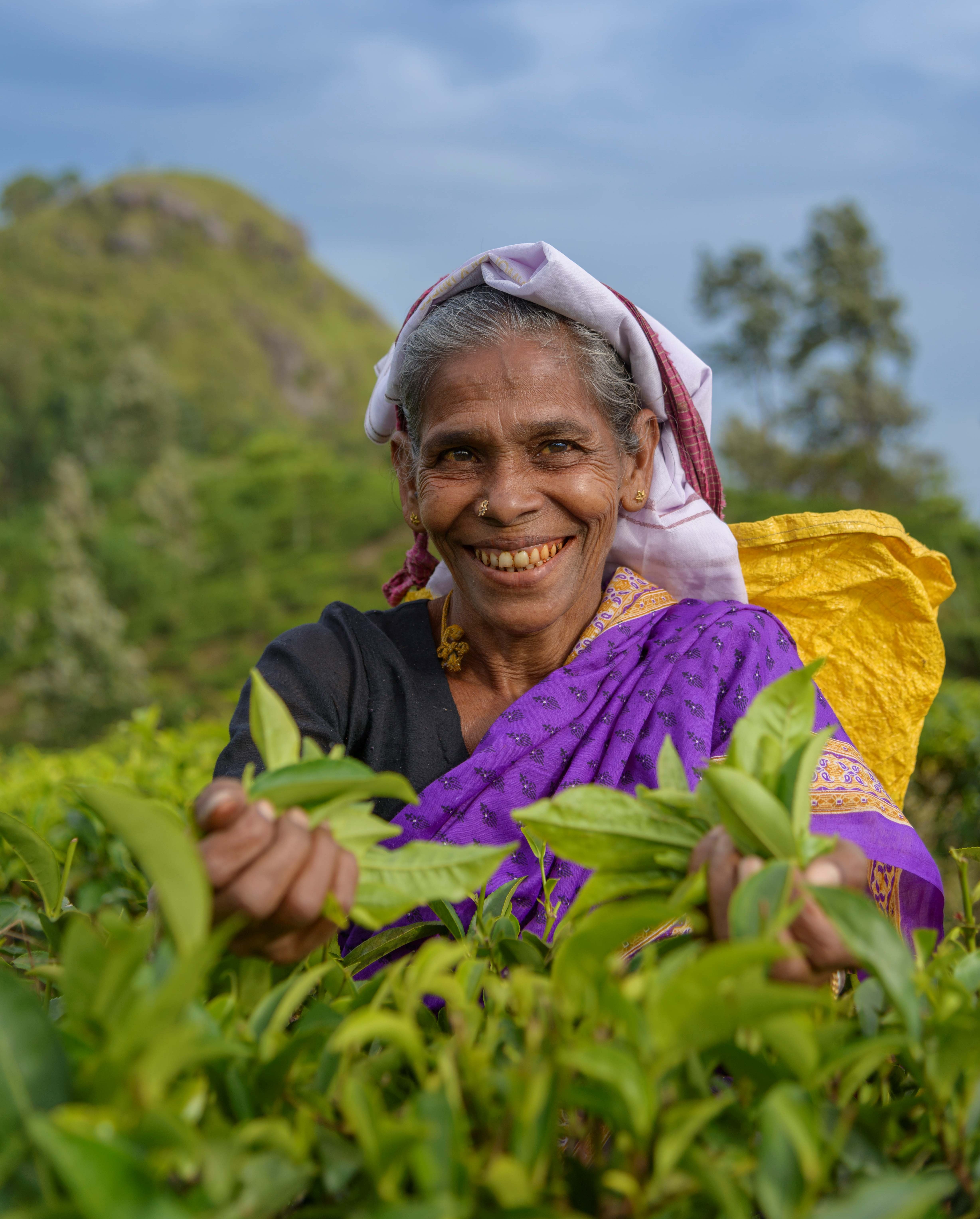
Sri Lanka is experiencing a profound demographic transformation, marked by a rapidly ageing population. This demographic shift presents both significant challenges and opportunities for the nation’s social, economic, and health systems. To respond to this development, the Government of Sri Lanka adopted a new "National Policy for Elders" in October 2025. According to its preamble, the National Policy for Elders affirms the commitment of the Government of Sri Lanka to creating an inclusive, supportive, and age-friendly society. It is guided by global frameworks such as the Madrid International Plan of Action on Ageing (2002), UN Decade of Healthy Ageing (2021-2030) and the Protection of the Rights of Elders Act No. 9 of 2000 of Sri Lanka and its amendments. This policy provides a comprehensive framework to address the multifaceted needs of older persons, promote healthy and active ageing, and foster intergenerational solidarity.
Checklist for the policy process
Key stages in the policy development process
- Establishing institutional arrangements
- Leadership and planning for the policy development process
- Engaging key stakeholders
- Reviewing and mapping existing legal and policy frameworks
- Conducting situational analysis on older persons and ageing
- Identifying policy instruments: laws, policies and action plans/strategies
- Agreeing principles and vision
- Developing strategic and holistic policy
- Planning for implementation
- Establishing monitoring and evaluation processes
- Finalising policy

Photo by rdne, www.pexels.com, No. 5637742
Establishing institutional arrangements
Actions
- Individuals, government ministries and/or other bodies responsible for ageing and older persons within the country and for leading on policy and its implementation are set-out
- Responsibilities and functions of the above are clearly outlined alongside how coordination between them will be managed
- Clear lines of accountability for the above are established
- Older persons and key stakeholders are represented within institutional arrangements, ensuring they have voice and influence in the policy process
- Human and financial resources for the functioning of institutional arrangements are secured

Photo by Bhavesh Jain, www.pexels.com, No. 2248503
Leadership and planning for the policy development process
Actions
- Roles and key tasks of individuals, ministries and other bodies in the policy-making process are set-out
- Leadership for the policy-development process is clear
- How coordination will be managed both across relevant institutions (horizontal coordination) and between different levels of government (vertical coordination) is established
- Timeline for each stage of the policy development process is set-out and agreed
- Funding and human resources for the policy development process are identified and agreed
- Plans for securing political support from the highest levels, alongside human and financial resources for policy implementation are identified

Photo by Batin Özen, www.pexels.com, No. 7611332
Engaging key stakeholders in the policy-making process
Actions
- Stakeholder mapping conducted considering both primary and secondary stakeholders
- A plan for how you will engage key stakeholders throughout the policy-making process is agreed, and mechanisms identified
- Responsibility for the inclusion and engagement of stakeholders throughout the process is assigned
- The roles of different stakeholder groups in the policy-making process re outlined
- Resources to support meaningful engagement of stakeholders, including more marginalised groups of older persons, are secured

Photo: AI-generated picture
Reviewing and mapping existing legal and policy frameworks
Actions
- Existing policy and legislation related to ageing, older persons and development are reviewed and mapped (with reference to MIPAA and other relevant global and regional frameworks related to ageing and development) noting lines of responsibilities for law and policy
- Overlaps, gaps and synergies across policy and legislation are identified
- Rights framework in country is mapped and gaps in relation to older persons are identified

Photo by Tima Miroshnichenko: https://www.pexels.com/photo/man-person-people-coffee-6615291/
Conducting situational analysis on older persons and ageing
Actions
- Working with stakeholders, existing data is reviewed and mapped, with information on the level of disaggregation available indicated.
- Data gaps/data needed to support a comprehensive situational analysis on ageing and older persons are identified in consultation with stakeholders, considering the needs of current and future generations of older persons, trends in population ageing, and both qualitative and quantitative data
- Plans for obtaining missing data are identified, as possible.
- Human and financial resources to support the collection and analysis of the required data is identified and agreed, ensuring age, sex, gender, disability, socio-economic group and geography disaggregation as a minimum.
- Clear processes and principles for how data will inform policy development are agreed
- All data is made publicly available

Photo by Long Lens, www.pexels.com, No. 28549599
Identifying policy instruments: laws, policies and action plans/strategies
Actions
- National policy, plan/strategy, and legislation is considered and necessary instruments are identified
- How policy will be mainstreamed into population-wide development processes is considered

Photo by Pixabay, www.pexels.com, No. 357514
Agreeing principles and vision for an ageing society and for older persons
Actions
- Principles and vision for an ageing society and for older persons are agreed in line with national, regional and international legal and policy frameworks
- Definition of older person is agreed
- Target group for policy is agreed
- How policy will protect and promote older person’s human rights is outlined
- The shared aspirations for older persons and the future of older age are agreed and outlined
- How responsibility for older persons’ wellbeing will be shared among the state, the individual, the family and communities is considered
- The role of different sectors in ageing policy is outlined
- Ambitions for promoting intergenerational solidary are articulated

Photo by Robert Stokoe, www.pexels.com, No. 105922-2782998
Developing strategic and holistic policy
Actions
- The results of the legal and policy framework mapping, the situational analysis and the vision and principles for older persons are used to support the identification of policy goals and objectives
- Issues affecting older persons are considered holistically to inform integrated approaches to ageing, and are informed by national, regional and international frameworks (see below and full document)
- Policy adopts a life-course approach to ageing
- Policy is underpinned by the commitment to nationally appropriate social protection systems and measures for all, including floors, to support security, health and wellbeing across the life-course
- Policy adopts a gender sensitive and transformative approach and promotes gender equality at all ages, including in later life
- Ageing policy is mainstreamed and integrated with population-wide policy, including national development plans, poverty reduction strategies, disaster risk reduction plans, disability strategies, health and care policies, and social protection plans.
- Policy takes a whole-of-government and whole-of-society approach to ageing, identifying opportunities for synergy and joint action to be leveraged between population-wide policy and ageing-specific policy
- Policies adopted are coherent and streamlined with wider policy processes, ensuring they collectively contribute to the achievement of overall goals

Photo by Sergey Filippov, www.pexels.com, No. 1993-8232060
Priority Direction 1: Older persons and development
- Issue 1: Active participation in society and development
- Issue 2: Work and the ageing labour force
- Issue 3: Rural development, migration and urbanization
- Issue 4: Access to knowledge, education and training
- Issue 5: Intergenerational solidarity
- Issue 6: Eradication of poverty
- Issue 7: Income security, social protection/social security and poverty prevention
- Issue 8: Emergency situations

Photo by MO SKDO, www.pexels.com, No. 195341111-14441382
Priority Direction 2: Advancing health and wellbeing into old age
Actions
Policy addresses:
Related frameworks and policy approaches
Related SDGs: 1 (poverty), 2 (hunger and food security), 4 (education and life-long learning), 5 (gender equality), 8 (inclusive growth), 9c (resilient infrastructure, inclusive industrialisation), 10 (reduce inequality), 11 (cities and human settlements), 13 (climate change), 16 (inclusive societies and justice for all) 17 (inclusive data)
Related policy frameworks: Incheon Strategy to make the Right Real for Persons with Disabilities 2012; ILO Centenary Declaration on the Future of Work, 2019; Global Compact for Safe, Orderly and Regular Migration; Sendai Framework for Disaster Risk Reduction 2015-30
Strategic approaches: Life-course approach to development, comprehensive social protection at all ages, and social pensions
- Issue 1: Health promotion and well-being throughout life
- Issue 2: Universal and equal access to health-care services
- Issue 3: Older persons and HIV/AIDS
- Issue 4: Training of care providers and health professionals
- Issue 5: Mental health needs of older persons
- Issue 6: Older persons and disabilities

Photo by Elgene Buhong, www.pexels.com, No. 19166104-6975046
Priority Direction 3: Ensuring enabling and supportive environments
Actions
Policy addresses:
- Issue 1: Housing and the living environment
- Issue 2: Care and support for caregivers
- Issue 3: Neglect, abuse and violence
- Issue 4: Images of ageing
Policy should be informed by and integrated with related frameworks and processes, and adopt strategic approaches (see below):
Related frameworks and policy approaches
SDGs: 3 (healthy lives and wellbeing), 5 (gender equality) (and CEDAW), 9 (resilient infrastructure, inclusive and sustainable industrialization and innovation), 10 (reduce inequality), 11 (cities and human settlements), 16 (inclusive societies), 17 (inclusive data)
Section-specific frameworks: Global Age-Friendly Cities framework 2008, Incheon Strategy to make the Right Real for Persons with Disabilities 2012; ILO Centenary Declaration on the Future of Work, 2019, Political Declaration of the High-level Meeting on Universal Health Coverage, 2019
Strategic approaches: Promoting enabling environments that support persons across the-course; integrated health and long-term care systems; age-friendly cities and communities; changing how we think, feel and act towards age and ageing.

Photo by Quang Nguyen Vinh, www.pexels.com, No. 222549-6346778
Planning for implementation
Actions
A policy implementation plan is developed and includes:
- Actions needed to achieve the policy goals and objectives, and timeline for achieving them
- Roles of different stakeholders in policy implementation (local, national, public sector, private section, voluntary sector etc)
- Details of who has overall responsibility for policy implementation and accountability mechanisms
- Financial and human resources to be made available to support policy implementation
- Activity to raise awareness of the policy goals, objectives and actions
- Details on coordination mechanisms
- Methods for securing political will at highest levels
- Outlines additional instruments needed (legislation, regulation, guidance)
- Details of transparency and accountability mechanisms for policy implementation

Photo by Vo Van Tien, www.pexels.com, No. 2037497312-30288211
Establishing monitoring and evaluation systems
Actions
- Responsibility for data collection and knowledge and information management is agreed and details of how accountability and oversight of this function will be managed are outlined.
- A plan for the regular review of implementation and impact of policy is in place, outlining the roles and responsibilities of different actors and how stakeholders will participate
- The data needed to provide a baseline and to regularly monitor the impact of policy in different areas and on different groups of older persons is agreed, including specific output and outcome measures for each policy objective/goals.
- Transparency and accountability mechanisms are agreed for monitoring and evaluation, including participatory and consultative mechanisms that include key stakeholders, information on how the outcomes of monitoring and evaluation and related data will be made publicly available and widely disseminated, and mechanisms to ensure that learnings are captured and fed-into policy-making and practice to ensure improvement.
- Human and financial resources to support the monitoring and evaluation process are secured.

Photo by Antoni Shkabra Studio, www.pexels.com, No. 5816291
Finalising policy
Actions
- The process for finalising the policy is agreed at the beginning of the policy development process, ensuring estimates of the time this will take are taken into account, leaving room for possible delays
- Those with responsibilities for the policy implementation are well informed and prepared for what happens when the policy is finalised.
- The policy document includes information on the policy-making process, including stakeholder engagement, the situation analysis, vision and principles design, etc.
- The public is well informed about the policy and the measures that it includes. Public consultation process and/or communications have raised awareness of the policy and disseminate information at all levels.
- Policy launched by or endorsed at the highest possible level to help secure political will
- Key stakeholders are actively engaged in communications planning.

Photo by Evangelos Bountaniotis, www.pexels.com, No. vagelis83-10613237.
The checklist identifies elements of the policymaking process for developing national policy responses on ageing and older persons.
Source and for more information: ESCAP 2021. Key elements for developing ageing policies in Asia and the Pacific. SDD Working Paper 2021/22. December 2021, available at: https://www.population-trends-asiapacific.org/repositories/policies
Blogs and Op-eds

National inclusion accounts: a tool to promote intergenerational equity

Growing older, staying connected in the digital age

Building a future-ready society so people can live long and age well
Latest News
ESCAP launches a new video highlighting the benefits of intergenerational support
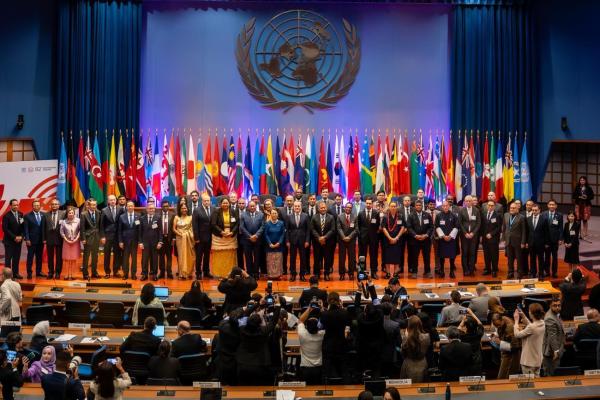
Asia-Pacific governments endorse landmark Baku-Bangkok Declaration on advancing societies for all ages