ESCAP offers different venues and platforms for governments and non-government stakeholders, including civil society organizations, trade unions, the private sector and others to meet and discuss
ESCAP provides the most inclusive platform for governments to meet and discuss social development issues in Asia and the Pacific. It also organizes expert group meetings, capacity-building workshops and related events.
Event calendar
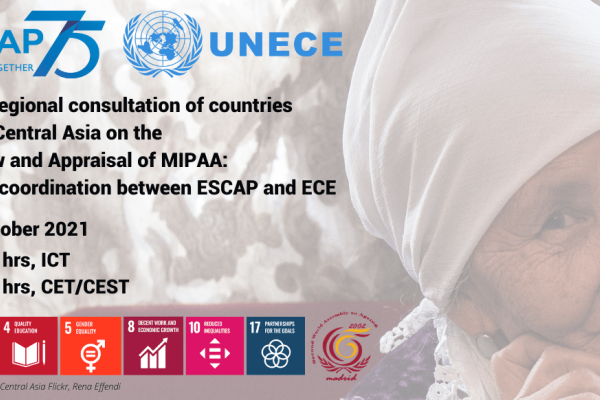
Informal subregional consultation of countries in North and Central Asia on the Fourth Review and Appraisal of the Madrid International Plan of Action on Ageing
Populations in Asia and the Pacific and Europe are ageing. In Europe, one in six persons are over the age of 65, and this proportion is projected to increase to one in four by 2050. Asia and the Pacific is home to 60 per cent of all older persons in the world, with one in 11 persons considered to be old in 2020. This is projected to increase to one in five persons by 2050.
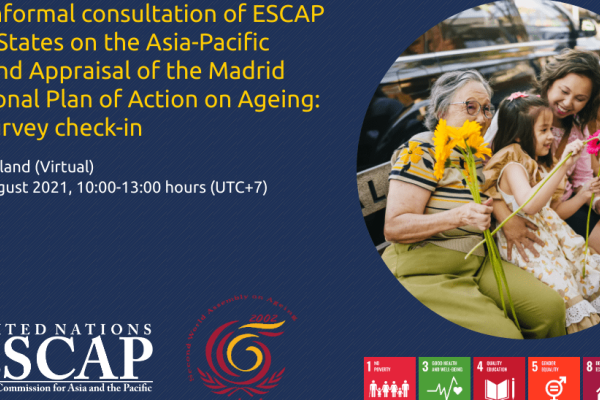
Second informal consultation of ESCAP member States on the Asia-Pacific Fourth Review and Appraisal of the Madrid International Plan of Action on Ageing: MIPAA survey check-in
The Asia-Pacific region is ageing rapidly. The percentage of people aged 60 years or over will increase from 13.6 per cent in 2020 to 24.9 per cent in 2050. These demographic shifts present challenges and opportunities that require forward-looking policies to ensure inclusive and active ageing. In 2002, United Nations Member States adopted the Madrid International Plan of Action on Ageing (MIPAA), the global action plan to “build societies for all ages”.
Advancing the implementation of the Global Compact for Migration – Key lessons learned from the GCM regional review processes – inputs from the Asia-Pacific and Europe regions
The Permanent Missions of the Philippines and Portugal to the United Nations, ESCAP and the Regional United Nations Network on Migration for Asia and the Pacific are organizing a side event at the 2021 high-level political forum (HLPF).
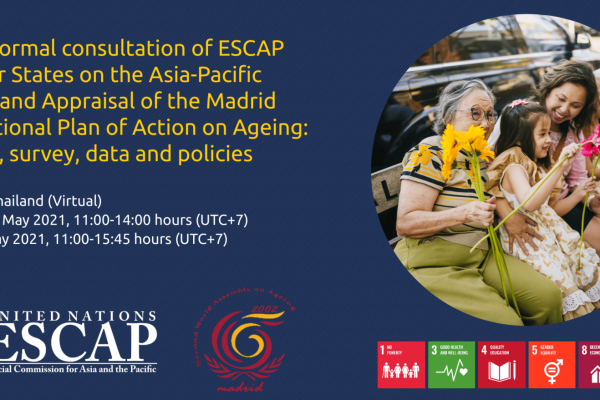
First informal consultation of ESCAP member States on the Asia-Pacific Fourth Review and Appraisal of the Madrid International Plan of Action on Ageing: process, survey, data and policies
The Asia-Pacific region is ageing rapidly. The percentage of people aged 60 years or over will increase from 13.6 per cent in 2020 to 24.9 per cent in 2050. These demographic shifts present challenges and opportunities that require forward-looking policies to ensure inclusive and active ageing. In 2002, United Nations Member States adopted the Madrid International Plan of Action on Ageing (MIPAA), the global action plan to “build societies for all ages”.
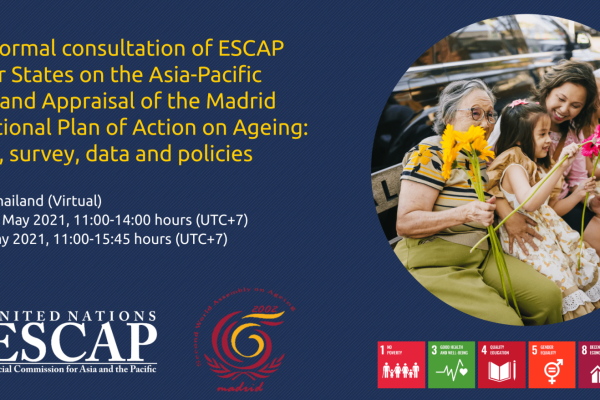
First informal consultation of ESCAP member States on the Asia-Pacific Fourth Review and Appraisal of the Madrid International Plan of Action on Ageing: process, survey, data and policies
The Asia-Pacific region is ageing rapidly. The percentage of people aged 60 years or over will increase from 13.6 per cent in 2020 to 24.9 per cent in 2050. These demographic shifts present challenges and opportunities that require forward-looking policies to ensure inclusive and active ageing.
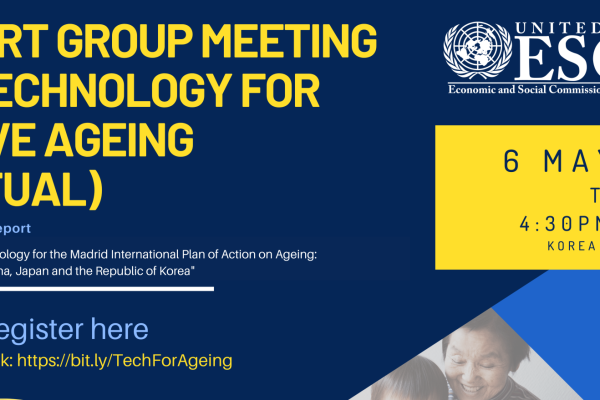
Expert Group Meeting on Technology for Active Ageing
Asia and the Pacific is experiencing a rapid demographic transition towards an ageing population. While rising life expectancy is one of humanity’s major achievements, population ageing presents unprecedented economic and social challenges. The devastating socio-economic impact of COVID-19 on older persons further highlights the need to provide better support to older persons and their families during times of crisis and emergency.
Blogs and Op-eds

Growing older, staying connected in the digital age

Building a future-ready society so people can live long and age well

Strengthening social health protection for health coverage for all ages
Latest News
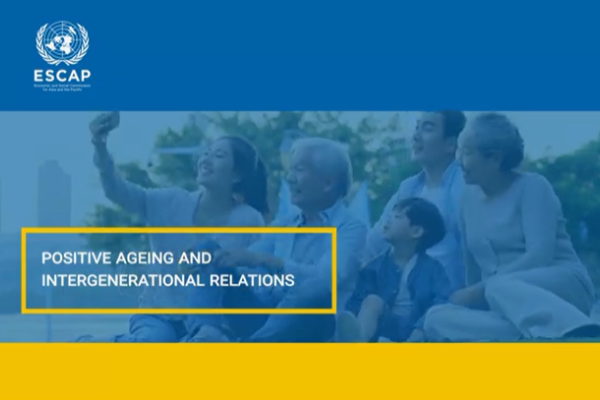
ESCAP launches a new video highlighting the benefits of intergenerational support

Asia-Pacific governments endorse landmark Baku-Bangkok Declaration on advancing societies for all ages