
Policy-oriented research on population trends
ESCAP publishes reports, working papers, policy briefs and other material analyzing population trends and their policy implications in the Asia-Pacific region. The publications will guide policymakers and all stakeholders.

Latest Publication
Leaving No One Behind: Advancing a Society for All Ages in Asia and the Pacific
This report examines the demographic drivers reshaping the region, analyses the implications for labour markets and the future of work, and highlights the transformative potential of healthy and active ageing. It documents the substantial economic contributions of older persons — through labour, entrepreneurship, unpaid care and social capital — and makes the case for urgently realigning employment systems, social protection and health policies with demographic realities. The report also explores pathways to women’s economic empowerment, recognizing that gender inequality compounds the vulnerabilities of ageing across the life course.
Publications
ESCAP population data sheet 2023
The Population Data Sheet, published annually by ESCAP, features a range of key indicators on population and development. The focus is on population size, structure and growth rates, as well as fertility, mortality and migration, at country, subregional and regional levels. The Data Sheet is a useful reference tool for researchers, policymakers and other stakeholders.
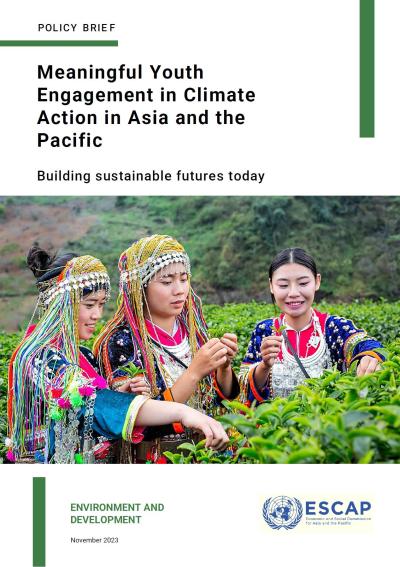
Meaningful youth engagement in climate action in Asia and the Pacific : building sustainable futures today
This policy brief on Meaningful Youth Engagement in Climate Action in Asia and the Pacific intends to guide governments and other institutions in Asia and the Pacific towards achieving more meaningful youth engagement in climate action and provides a set of general recommendations to do so.
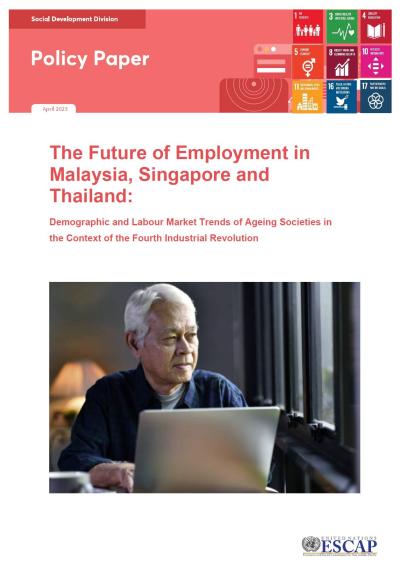
The future of employment in Malaysia, Singapore and Thailand: demographic and labour market trends of ageing societies in the context of the fourth industrial revolution
Malaysia, Singapore and Thailand are facing challenges to ensure adequate old-age income security and social protection for older persons due to demographic and labour market shifts. While these countries have successfully managed to improve socioeconomic well-being, declines in the number of prime working age adults, ageing populations and technological changes will accelerate the need for participation of older persons in the workforce.
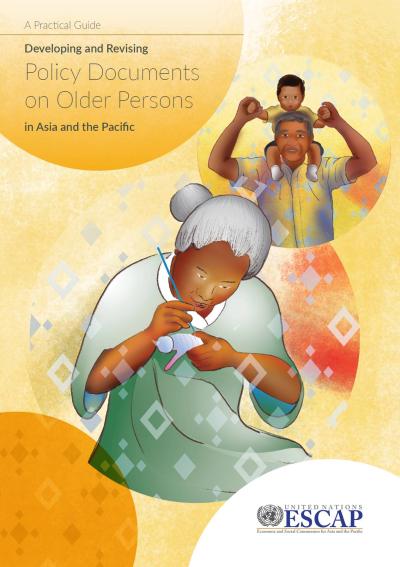
A practical guide : developing and revising policy documents on older persons in Asia and the Pacific
This publication is a guide for Asia-Pacific policymakers and practitioners in developing and revising policies and programmes on older persons. It provides an overview of (a) global, regional and subregional norm-setting documents that address issues related to older persons and (b) linkages between the Sustainable Development Goals and the priority directions of the Madrid International Plan of Action on Ageing (MIPAA). It describes documents, including laws, policies, strategies and action plans. There are templates of these documents and a checklist for developing policies and programmes on population ageing. Tools developed by ESCAP to support member States in drafting and revising policy-related documents on ageing are highlighted. The Annex contains the 2022 outcome document of the Asia- Pacific Intergovernmental Meeting on the Fourth Review and Appraisal of the Madrid International Plan of Action on Ageing, which is the most recent region-specific norm-setting document on population ageing in Asia and the Pacific.
ESCAP population data sheet 2022
The Population Data Sheet, published annually by ESCAP, features a range of key indicators on population and development. The focus is on population size, structure and growth rates, as well as fertility, mortality and migration, at country, subregional and regional levels. The Data Sheet is a useful reference tool for researchers, policymakers and other stakeholders.
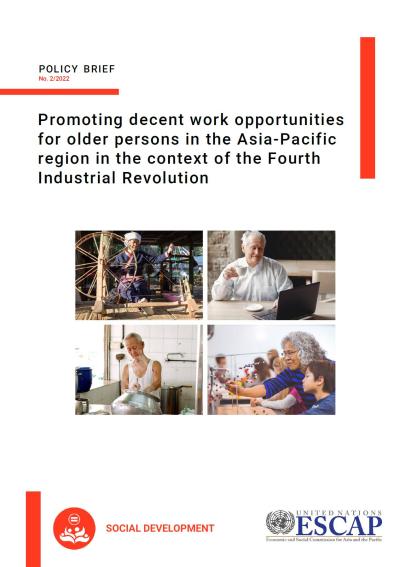
Promoting decent work opportunities for older persons in the Asia-Pacific region in the context of the fourth industrial revolution
The populations of countries in the Asia-Pacific region are ageing at an unprecedented pace. There are variations across countries, yet all are moving in the direction of increasing absolute numbers and proportions of older persons. Population ageing is driven by declining fertility and mortality, coupled with increased longevity, or the demographic transition. Overall, it is the result of successful economic and social development, and as such, rising life expectancy should be celebrated as one of humanity’s major achievements.
Events
Fifth Asia-Pacific Review and Appraisal of the Madrid International Plan of Action on Ageing: Briefings of focal points on ageing in North and Central Asia
Blogs and Op-eds

Building a future-ready society so people can live long and age well

Strengthening social health protection for health coverage for all ages