
Policy-oriented research on population trends
ESCAP publishes reports, working papers, policy briefs and other material analyzing population trends and their policy implications in the Asia-Pacific region. The publications will guide policymakers and all stakeholders.

Latest Publication
Leaving No One Behind: Advancing a Society for All Ages in Asia and the Pacific
This report examines the demographic drivers reshaping the region, analyses the implications for labour markets and the future of work, and highlights the transformative potential of healthy and active ageing. It documents the substantial economic contributions of older persons — through labour, entrepreneurship, unpaid care and social capital — and makes the case for urgently realigning employment systems, social protection and health policies with demographic realities. The report also explores pathways to women’s economic empowerment, recognizing that gender inequality compounds the vulnerabilities of ageing across the life course.
Publications
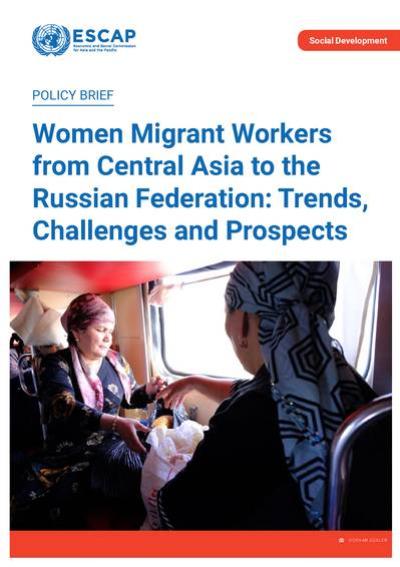
Women migrant workers from Central Asia to the Russian Federation : trends, challenges and prospects
The Russian Federation remains a key destination of migrants. In 2024, the Russian Federation hosted 7.6 foreign born people, among them 3.8 million women and 3.7 million men.
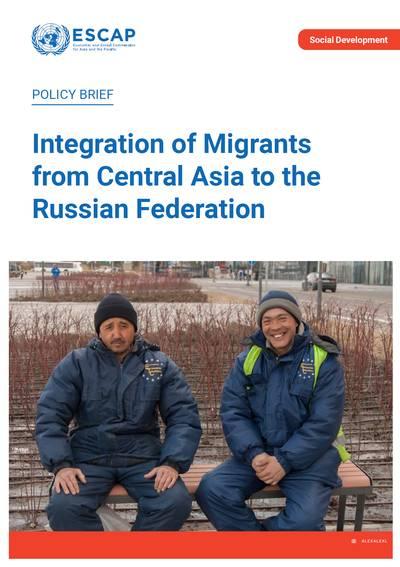
Integration of migrants from Central Asia to the Russian Federation
This policy brief is based on an unpublished working paper on “Integration of migrants from Central Asia in the Russian Federation”, commissioned by ESCAP. The working paper utilized survey data from five studies conducted by the author (2015, 2016, 2017, 2020, and 2023), each with similar but not identical methodologies and different research focuses. The objective of this policy brief is to highlight the status of migrant worker integration in the Russian Federation and provide summary conclusions. The focus is on migrant workers from Kazakhstan, Kyrgyzstan, Tajikistan and Uzbekistan.

Asia-Pacific sustainable development journal. Vol. 32, No. 1, April 2025
The focus of this issue of the Asia Pacific Sustainable Development Journal (APSDJ, Vol. 32, Issue 1) is the demographic transition in Asia-Pacific countries and its intergenerational implications. The theme is very timely as countries in Asia and the Pacific – home to close to 60 per cent of the world’s population – are experiencing a rapid demographic transition.

On the road to the Second World Summit for Social Development : contributions from the United Nations regional commissions
The present summary synthesizes the key regional insights and policy recommendations presented in the joint document of the five regional commissions, which will serve as an input for the preparatory process of the Second World Summit for Social Development.

2024 ESCAP population data insights
The population in Asia and the Pacific continues to grow, but at a declining rate. In 2024, there were 4.8 billion people living in the region, representing about 60 per cent of the total global population. Projections for 2050 indicate a rise to 5.2 billion people. Subregional trends reveal diverse dynamics: substantial growth in South and South-West Asia, stagnation and decline in East and North-East Asia, moderate growth in South-East Asia and North and Central Asia, and steady, low growth in the Pacific. Population stagnation and decline pose challenges and opportunities for countries which should be addressed from a people-centered and human rights perspective.
Remittances in Asia and the Pacific - a focus on North and Central Asia
Remittances are a crucial income source in Asia and the Pacific, particularly several countries in Central Asia, but high transaction costs limit their impact. While SDG 10c aims to reduce these costs globally, understanding the factors behind them is essential for effective policy.
Events
South-East Asia - Stakeholder Consultation for the Asia-Pacific Fifth MIPAA Review and Appraisal
Check in Meeting with Focal Points on Ageing (South and South West Asia and North and Central Asia)
Check in Meeting with Focal Points on Ageing (East and North East Asia, Pacific and South East Asia)
Blogs and Op-eds

Growing older, staying connected in the digital age

Building a future-ready society so people can live long and age well