
Policy-oriented research on population trends
ESCAP publishes reports, working papers, policy briefs and other material analyzing population trends and their policy implications in the Asia-Pacific region. The publications will guide policymakers and all stakeholders.


Latest Publication
ESCAP population data sheet 2026
The Population Data Sheet, published annually by ESCAP, features a range of key indicators on population and development. The focus is on population size, structure and growth rates, as well as fertility, mortality and migration, at country, subregional and regional levels. The Data Sheet is a useful reference tool for researchers, policymakers and other stakeholders. The 2026 Population Data Sheet focuses on overall population and development indicators, providing updated insights for the year.
Publications

Working to ensure the availability, affordability and accessibility of quality healthcare services for migrants in Asia and the Pacific
This paper examines migrant health in Asia and the Pacific through a sustainable development and rights perspective. It notes that the right to health applies to all people, regardless of migration status, and is fundamental to achieving Sustainable Development Goal 3 and universal health coverage.
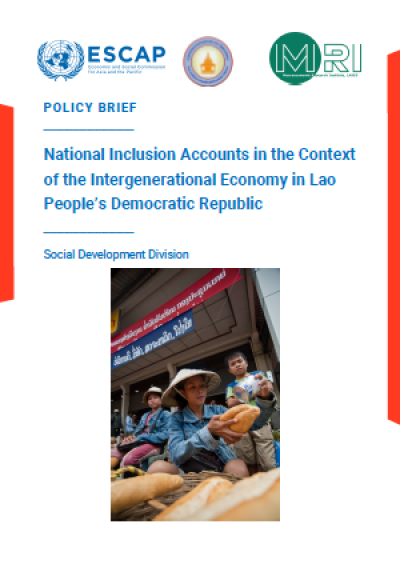
National Inclusion Accounts in the Context of the Intergenerational Economy in Lao People’s Democratic Republic
This policy brief analyses the situation in Lao People’s Democratic Republic using available data and supported by work of the NIA team from the Macroeconomic Research Institute, Lao Academy of Social and Economic Sciences, and the Lao Statistics Bureau, working with ESCAP on NTAs and NIAs; it is drawn from a more in-depth paper, which also covers Maldives and Viet Nam. This paper is one of several knowledge products that have been produced as part of an ESCAP capacity-development project on NIAs.

National Inclusion Accounts in the Context of the Intergenerational Economy in Maldives
This policy brief analyses the situation in Maldives using available data and supported by work of the NIA team from the National Statistical Office of Maldives working with ESCAP on NTAs and NIAs; it is drawn from a more in-depth paper, which also covers Lao People’s Democratic Republic and Viet Nam. This paper is one of several knowledge products that have been produced as part of an ESCAP capacity-development project on NIAs.

National Inclusion Accounts in the Context of the Intergenerational Economy in Viet Nam
This policy brief analyses the situation in Viet Nam using available data and supported by work of the NIA team from the National Statistics Office of Viet Nam working with ESCAP on NTAs and NIAs; it is drawn from a more in-depth paper, which also covers Lao People’s Democratic Republic and Maldives. This paper is one of several knowledge products that have been produced as part of an ESCAP capacity-development project on NIAs.
ESCAP population data sheet 2026
The Population Data Sheet, published annually by ESCAP, features a range of key indicators on population and development. The focus is on population size, structure and growth rates, as well as fertility, mortality and migration, at country, subregional and regional levels. The Data Sheet is a useful reference tool for researchers, policymakers and other stakeholders. The 2026 Population Data Sheet focuses on overall population and development indicators, providing updated insights for the year.
Building Social Welfare Interventions in China: Evidence from National Inclusion Account Estimates
China’s recent economic transformation has brought prosperity but also challenges in addressing inequality. To counter disparities, the government expanded its role in the economy and invested in social welfare. Education reforms ensured nine years of compulsory schooling, expanded higher education enrolment tenfold and strengthened vocational training. Healthcare coverage went from limited access in the early 2000s to near-universal insurance by 2024, while pension schemes now cover over 95 per cent of the population. Between 2010 and 2014, public spending on education, healthcare and pensions more than doubled, narrowing gaps across income groups.
Events
Committee on Social Development, Ninth session
Expert Group Meeting on Population and Development: Population ageing trends and policy priorities in view of the Fifth Review and Appraisal of the Madrid International Plan of Action on Ageing (MIPAA) in Asia and the Pacific
Asia-Pacific Regional Conference on Population Ageing 2026
Blogs and Op-eds

The future of ageing: Advancing inclusive geriatric health through AI in Asia and the Pacific

National inclusion accounts: a tool to promote intergenerational equity