Policy-oriented research on population trends
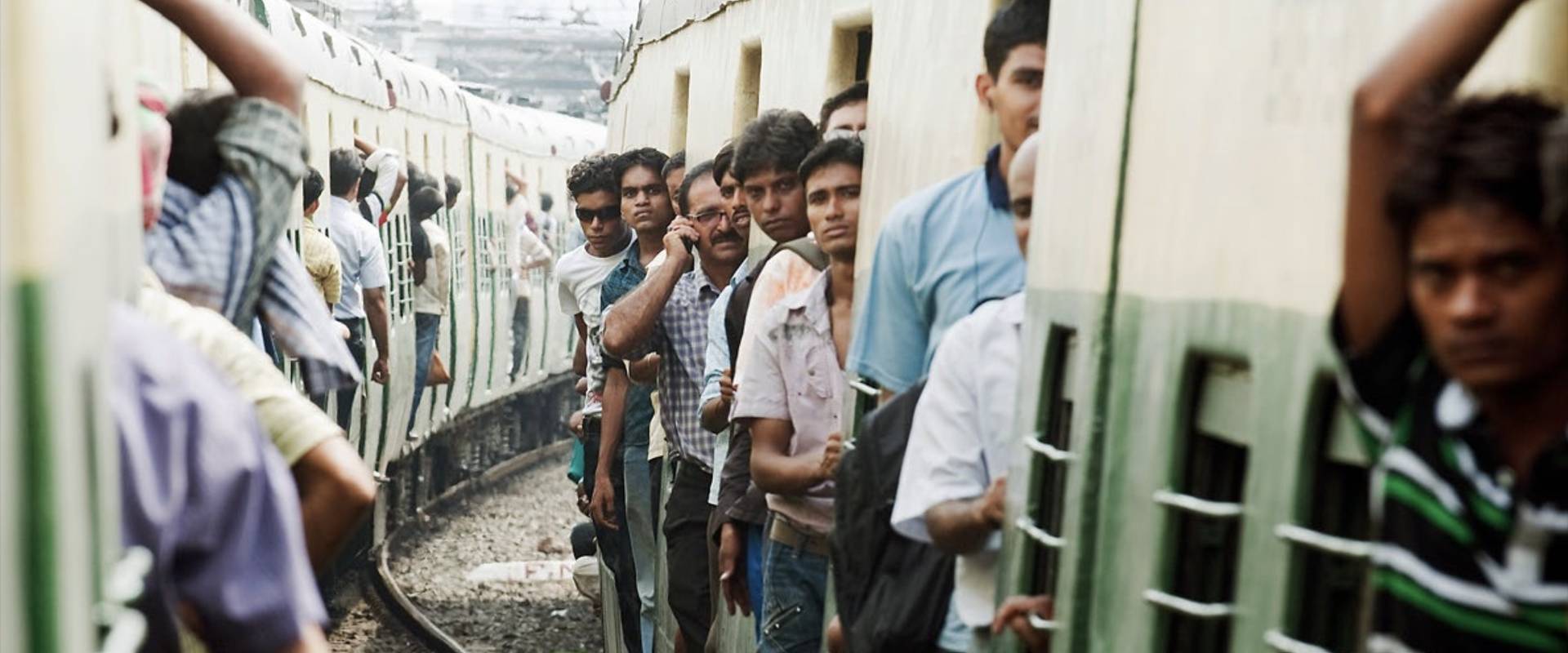
ESCAP publishes reports, working papers, policy briefs and other material analyzing population trends and their policy implications in the Asia-Pacific region. The publications will guide policymakers and all stakeholders.
Latest Publication
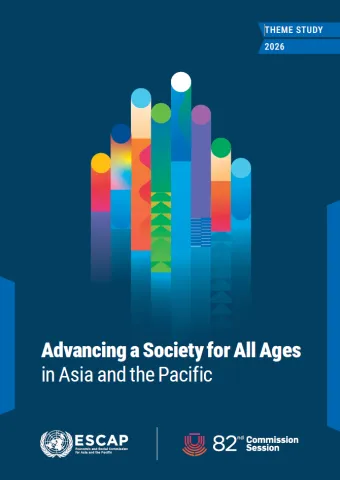
Leaving No One Behind: Advancing a Society for All Ages in Asia and the Pacific
This report examines the demographic drivers reshaping the region, analyses the implications for labour markets and the future of work, and highlights the transformative potential of healthy and active ageing. It documents the substantial economic contributions of older persons — through labour, entrepreneurship, unpaid care and social capital — and makes the case for urgently realigning employment systems, social protection and health policies with demographic realities. The report also explores pathways to women’s economic empowerment, recognizing that gender inequality compounds the vulnerabilities of ageing across the life course.
Publications
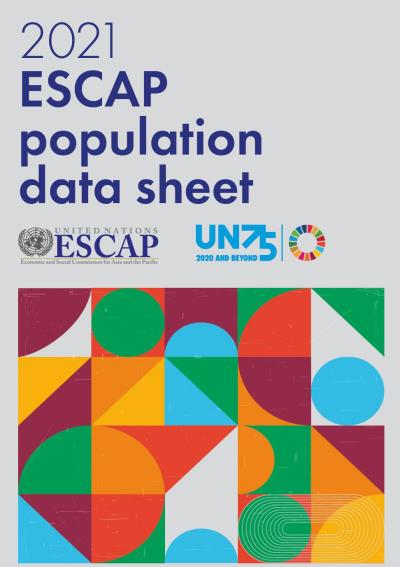
ESCAP population data sheet 2021
The Population Data Sheet, published annually by ESCAP, features a range of key indicators on population and development. The focus is on population size, structure and growth rates, as well as fertility, mortality and migration, at country, subregional and regional levels. The Data Sheet is a useful reference tool for researchers, policymakers and other stakeholders.
Key elements for developing ageing policies in Asia and the Pacific
The working paper provides guidance on what should be considered when policies on population ageing and older persons are being developed. It provides information on the policy context and existing global policy instruments that inform ageing policies. It further discusses how policy responses to population ageing and addressing the situation of older persons can be developed, ranging from establishing institutional arrangements, policy planning, stakeholder engagement as well as planning for implementation and monitoring. The paper provides a range of policy options and good practice examples of policies and processes from countries in the Asia-Pacific region. The paper concludes with a checklist of policy elements and processes to consider in the policy process.
Statistical indicators relevant to population ageing and age-disaggregated data in Asia and the Pacific
The paper on “Statistical Indicators Relevant to Population Ageing and Age-disaggregated Data in Asia and the Pacific” suggests a set of indicators for the regular and structured assessment of MIPAA in Asia and the Pacific, mostly based on SDG indicators and supplemented by other indicators. The paper also discusses the suitability of indicators that can be used to assess MIPAA implementation and also lists related sources of data and data availability. Data availability and the possibility to collect these data are key considerations in suggesting a set of MIPAA indicators.
Using information and communication technologies to address the health-care needs of older persons managing chronic disease : a guidebook and good practices from Asia and the Pacific
Many countries across the Asia-Pacific region are experiencing rapid population ageing and increased rates of chronic disease, leading to greater demand for high-quality, accessible and affordable health-care services for their growing numbers of older persons. The objective of this guidebook is to provide policymakers and other key stakeholders in the region with a resource for the formulation of innovative solutions to address these demographic shifts and related health-care challenges. The focus of the guidebook is on applying information and communication technologies (ICTs) to enable equitable access to high-quality health-care services for older persons facing chronic diseases. It also aims to see how ICTs, can benefit older persons, given demographic, social and economic changes and the future of work in Asia and the Pacific, especially in the health-care sector. Hence the current and expected impact of the Fourth Industrial Revolution play a significant role in shaping how policies are planned and implemented.
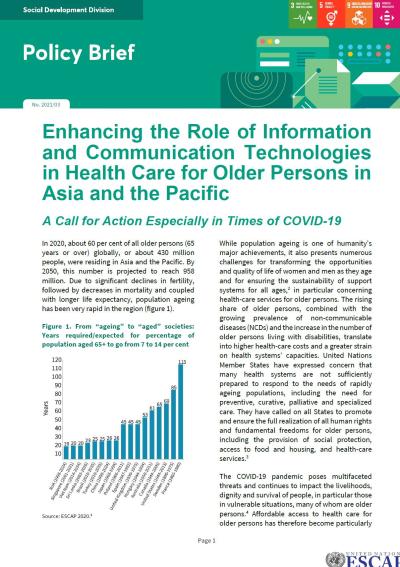
Enhancing the role of information and communication technologies in health care for older persons in Asia and the Pacific
The COVID-19 pandemic poses multifaceted threats and continues to impact the livelihoods, dignity and survival of people, particularly older persons and other vulnerable groups. Affordable access to health care for older persons has therefore become particularly important. COVID-19 has spurred new information and communication technology (ICT) initiatives, enabling continued or enhanced access to quality health care through remote diagnosis, treatment and care, particularly for older persons. This policy brief provides policy options on how ICTs can be used to facilitate access to healthcare for older persons during the COVID-19 pandemic and beyond.
2020 older persons in ASEAN in numbers
The datasheet “2020 Older persons in ASEAN in numbers” provides data on key indicators to reflect the status of population ageing and the situation of older persons in Member States of the Association of Southeast Asian Nations. The indicators range from population indicators such as numbers and percentages of older persons of different age cohorts, disaggregated by men and women, as well as indicators on health, employment, social protection, internet use, education and living arrangements. The datasheet is a tool for reference by policymakers, stakeholders and researchers to design policies to implement the Madrid International Plan of Action on Ageing and the Kuala Lumpur Declaration on Ageing: Empowering Older Persons in ASEAN.
Events
South-East Asia - Stakeholder Consultation for the Asia-Pacific Fifth MIPAA Review and Appraisal
Check in Meeting with Focal Points on Ageing (South and South West Asia and North and Central Asia)
Check in Meeting with Focal Points on Ageing (East and North East Asia, Pacific and South East Asia)
Blogs and Op-eds

Growing older, staying connected in the digital age

Building a future-ready society so people can live long and age well